WebP to PDF Converter
Turn images saved from websites into one PDF. Free, and it runs in your browser, so your files are not uploaded.
TL;DR
WebP to PDF turns images saved from websites into one PDF, with one page per image. This free converter runs in your browser, so your files are not uploaded. Add up to 50 WebP files on a computer, put them in order, pick a page size and download the PDF.
Drop your WebP files hereDrop your WebP files here
JPG, PNG, TIFF, SVG, GIF and BMP work too.
Your files are processed in your browser. They are not uploaded.
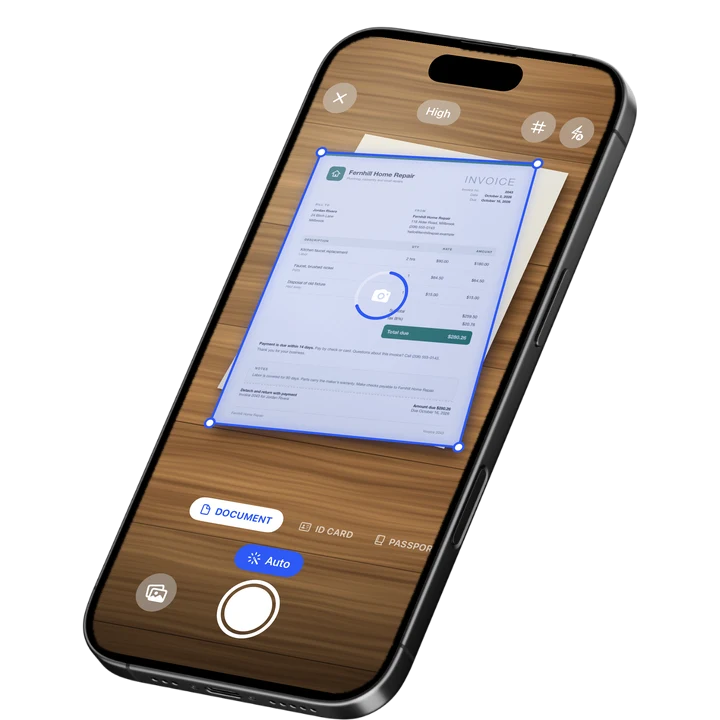
How to Convert WebP to PDF
1
Add your images
Drop your WebP files on the tool, or choose them from your device.
2
Order and size
Move files up or down, then pick Fit to image, A4 or Letter.
3
Download the PDF
Press Convert to PDF and save the one PDF with a page for each image.
What Is a WebP File
WebP is an image format from Google, first released in 2010. It has a lossy and a lossless mode and supports transparency and animation. Websites use it because the files are smaller than JPEG or PNG at similar quality. That is why an image you save from a web page is often a .webp file.
All current browsers open WebP. Many older programs, upload forms, office software and document systems do not, and they almost always accept PDF. That is the usual reason to convert: you saved images from the web, a chat app or a design tool, and now you need to print, send or upload them.
How WebP to PDF Works
A PDF cannot hold WebP data. It can keep a JPEG exactly as it is, but not a WebP. So your browser decodes each WebP into pixels first, and the converter stores those pixels again in a form a PDF accepts. The result opens in any PDF viewer.
- Images that compress well without loss, such as screenshots, text, logos and flat graphics, are stored lossless. Every pixel of the decoded image is kept.
- Photo-like WebP images are stored as JPEG at quality 90, to keep the PDF at a reasonable size.
Each WebP becomes one page, in the order of your list.
WebP Quality, Size and Transparency
Most WebP files are already lossy, so a photo-like one is compressed a second time as JPEG. At quality 90 the difference is hard to see, but it is not a bit-exact copy. Screenshots, text and flat graphics that are stored lossless keep every pixel.
Expect a larger file. WebP compresses harder than the formats a PDF can hold, so the PDF is usually larger than the WebP files. In a test, a text page saved as a 91 KB WebP became a 261 KB PDF, stored lossless.
Transparent areas become white, because a PDF page is paper. An animated WebP puts only its first frame into the PDF.
What This WebP to PDF Converter Does
This free converter runs in your browser, so your WebP files are not uploaded. It puts one or many images into one PDF, one page per image, in the order of your list. You can also add JPG, PNG, TIFF, SVG, GIF and BMP files to the same PDF.
- Up to 50 files, 100 MB each and 1,000 pages in total on a computer. Up to 20 files, 30 MB each and 300 pages in total on a phone.
- A WebP above 16 megapixels is scaled down to fit. That is larger than almost any image from the web.
- The PDF is made of images. Text in it cannot be selected or searched.
- A file that cannot be read is left out, and a short note says so.
To get the words out of an image, use the image to text tool. JPG files you add here go into the PDF as they are, with no re-compression. The JFIF to PDF page covers that format. For iPhone photos saved as HEIC, the HEIC viewer saves them as JPG or PNG.
Page Size and Printing
Fit to image is the default: each page is exactly as large as its image. A WebP stores no print size, so 96 pixels per inch is used. A 1,920 by 1,080 image becomes a page of 20 by 11.25 inches. On screen every viewer scales it to the window.
For printing, choose A4 or Letter. The image is centered and made as large as fits, keeping its shape, and a wide image gets a landscape page. No margin is added.
On-device OCR. Secure, built for iOS.
Frequently Asked Questions
How do I convert WebP to PDF?
Drop your WebP files on the tool, or choose them on your phone. Put them in order, pick Fit to image, A4 or Letter, and press Convert to PDF. You get one PDF with one page per image. It all runs in your browser, so your files are not uploaded.
Why can't a PDF hold a WebP image?
A PDF can keep JPEG data exactly as it is, but it cannot hold WebP data. So the browser decodes each WebP into pixels first, and the converter stores them again. Flat graphics are stored lossless, and photo-like images are stored as JPEG at quality 90.
Does converting WebP to PDF lose quality?
Images that compress well without loss, such as screenshots, text and logos, keep every pixel. A photo-like WebP is compressed again as JPEG at quality 90. The difference is hard to see, but it is not a bit-exact copy. Most WebP files are already lossy, so a second pass adds a little more.
Why is my PDF bigger than my WebP files?
WebP compresses harder than the formats a PDF can hold, so the PDF is usually larger than the WebP files. In a test, a text page saved as a 91 KB WebP became a 261 KB PDF, stored lossless. Every pixel was kept, and that takes more space.
What happens to transparent or animated WebP files?
Transparent areas become white, because a PDF page is paper. An animated WebP puts only its first frame into the PDF. If you need every frame, each one has to be saved as its own image first, and then added as a separate page.
Can I put many WebP images into one PDF?
Yes. On a computer you can add up to 50 files, 100 MB each, and up to 1,000 pages in total. On a phone the limits are 20 files, 30 MB each and 300 pages. Each image gets its own page, in the order of your list, and arrow buttons move a file up or down.
Are my WebP images uploaded anywhere?
No. The converter runs in your browser, so your images are processed on your own device and are not uploaded. There is nothing to install. Close the page and the files are gone from the tool.
Sources
More Free Tools
Text to PDF
Turn plain text, Markdown or a CSV table into a clean PDF.
HEIC Viewer
Open HEIC photos from an iPhone in any browser and save them as JPG or PNG.
TIFF to PDF
Convert a TIFF to a PDF, with every page of a multi-page fax or scan.
SVG to PDF
Turn an SVG drawing or logo into a PDF page, as a sharp image at 150, 300 or 600 dpi.
JFIF to PDF
Convert one or more JFIF images to a PDF. The JPEG data goes in untouched, with no quality loss.
Pixels to Inches
Convert pixels, inches, cm and mm at any DPI, with a PPI calculator and paper sizes in pixels.