Extract Text from Image
Image to text in your browser: turn a photo or screenshot into text you can copy. Free, and your picture is not uploaded.
TL;DR
Extract text from image files with this free tool. Add a JPG, PNG or screenshot, and the text appears in a box you can edit, copy or save as a .txt file. It runs in your browser, so your pictures are not uploaded. Printed text reads best.
Add images or a screenshotAdd images or a screenshot
JPG, PNG, HEIC, WebP, GIF, BMP, AVIF. Paste a screenshot too.
Your files are processed in your browser. They are not uploaded.
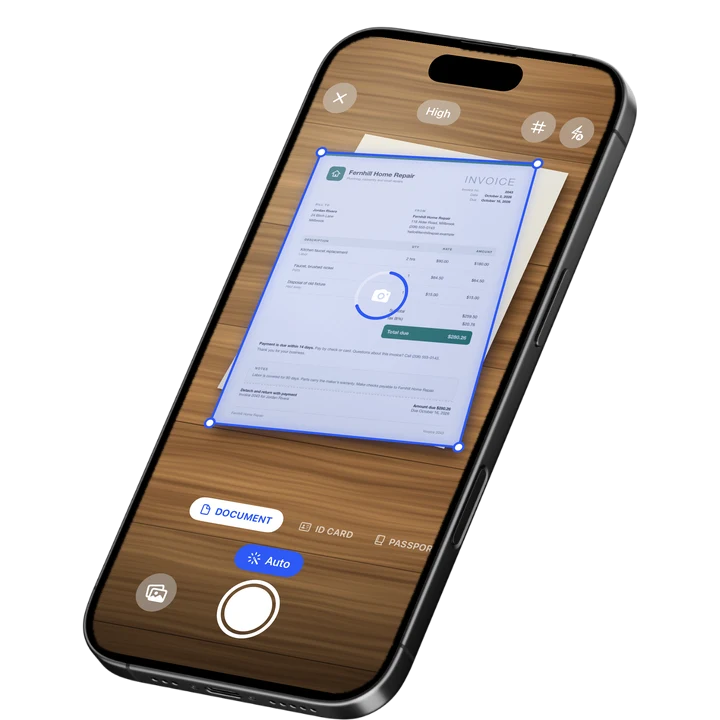
How to Extract Text from Image Files
1
Add an image
Choose a picture, drop it on the tool, paste a screenshot, or take a photo on a phone.
2
Check the language
English is the default, so pick another language from the list if your text is not English.
3
Copy or download
Edit the text if you like, then press Copy text or save it as a .txt file.
Image to Text Converter
This image to text converter reads the words in a picture and gives them back as plain text. Add a JPG, PNG or screenshot, and the text shows up in a box after a few seconds per image. You can edit it, copy it or save it as a .txt file. Your picture stays in your browser.
Before it reads, the tool tidies each picture. It straightens a small tilt, evens out shadows and uneven light, and turns dark-mode screenshots into dark text on a light background. Small print is enlarged and read a second time. Photos larger than 12 megapixels are scaled down.
- Up to 10 images at once, in JPG, PNG, HEIC, WebP, GIF, BMP or AVIF. Each can be up to 100 MB on a computer and 30 MB on a phone.
- The first use downloads about 4 MB into your browser: the reading software and the English language file. Your image is not uploaded. Phones are slower than computers.
- Printed and typed text reads well. Handwriting does not. Neat block letters sometimes come through with mistakes, and joined-up handwriting mostly does not.
- Blurry pictures, very small print and text next to a hard shadow edge read poorly.
- A photo taken at a steep angle, or text that lies sideways or upside down, reads poorly. The tool straightens a small tilt only.
- Pages with columns or tables: the words are read, but the order of columns can get mixed and the table layout is lost.
- The result is plain text. Fonts, bold, sizes, tables and pictures are not kept.
- One language per run. An animated GIF is read as its first frame.
Need the words from a PDF instead? Use PDF to text, which also reads scanned pages.
Extract Text from Image: Get a Clean Read
A sharp, straight, evenly lit picture gives the cleanest text. Hold your phone straight above the page, fill the frame with the page, and avoid shadows across the words. Pick the language the text is written in. These four habits matter more than anything else.
If a photo of a page is crooked or has a messy background, straighten and crop it first with the online document scanner. It saves a PDF, and PDF to text reads that. If the text here looks wrong, change the language above the text box. The same images are read again, so you do not need to add them twice.
Screenshot to Text
To copy text from a screenshot, copy the screenshot, then press Ctrl+V or Cmd+V anywhere on this page. The tool reads it right away. There is no button to press. You can also choose a screenshot file, or add several at once.
With several images, the text of each one stands under a line with its file name, all in one box and one .txt file. If a screenshot shows private details, cover them first with Redact Image. To turn the text into a document afterward, try text to PDF.
Image to Text Languages
The tool reads one language per run. English is the default, and you pick another from the list on the tool. Choose the language the text is written in. A wrong choice gives odd letters, and changing it reads the same images again.
This tool reads English, Arabic, Chinese (Simplified), Chinese (Traditional), Czech, Danish, Dutch, French, German, Indonesian, Italian, Japanese, Korean, Malay, Norwegian, Polish, Portuguese, Romanian, Russian, Spanish, Swedish, Thai, Turkish, Ukrainian and Vietnamese. Each extra language is a small file of 1 to 3 MB that your browser downloads the first time you use it.
Chinese, Japanese and Korean are read left to right as one column, with more mistakes than Latin scripts. Vertical text is not read.
Image to Text on Your iPhone
When the page is in front of you, skip the web page. On your iPhone, Filewise has an Extract Text scan mode that reads the text on a page in up to 25 languages. Some languages need a newer version of iOS. Copy the text, or export it as .txt or as a Word file.
On-device OCR. Secure, built for iOS.
Frequently Asked Questions
How do I extract text from image files?
Add a picture to the tool: choose it, drop it, or paste a screenshot. The tool reads the text right away and shows it in a box. Press Copy text to copy it, or Download to save it as a .txt file. You can edit the text first.
Is this image to text tool free?
Yes, the tool is free. It runs in your browser, so there is nothing to install. Add an image, and the text appears, ready to copy or save as a .txt file. You can read up to 10 images in one go.
Does image to text work on handwriting?
Not well. The tool is made for printed and typed text, such as screenshots, documents, book pages, invoices, signs and slides. Neat block letters sometimes come through with mistakes. Joined-up handwriting mostly does not. A sharp, straight picture of printed text gives the best result.
How do I copy text from a screenshot?
Copy the screenshot, then press Ctrl+V or Cmd+V anywhere on the page. The tool reads it right away. Dark-mode screenshots work too, because light text on a dark background is turned into dark text on light. Then press Copy text.
Is my picture uploaded?
No. The tool runs in your browser, so your pictures are not uploaded. The first use downloads about 4 MB into your browser: the reading software and the English language file. The browser keeps them, so later runs start right away.
Which languages can it read?
It reads one language per run: English, Arabic, Chinese (Simplified), Chinese (Traditional), Czech, Danish, Dutch, French, German, Indonesian, Italian, Japanese, Korean, Malay, Norwegian, Polish, Portuguese, Romanian, Russian, Spanish, Swedish, Thai, Turkish, Ukrainian and Vietnamese. English is the default, and you pick another from a list. Each extra language downloads a small file of 1 to 3 MB the first time you use it.
How big can the images be?
You can add up to 10 images at once. Each can be up to 100 MB on a computer and 30 MB on a phone. Formats are JPG, PNG, HEIC, WebP, GIF, BMP and AVIF. Photos larger than 12 megapixels are scaled down before reading.
Sources
More Free Tools
PDF to Text
Pull the text out of a PDF. Scanned pages are read with text recognition.
PDF Word Counter
Count the words, characters and pages in a PDF, with a count for every page.
Online Document Scanner
Scan paper with your camera or a photo, fix the corners, pick a look and save a multi-page PDF.
ID Card to PDF
Put the front and back of an ID card on one A4 or Letter page at true size and save it as a PDF.
Make a PDF Look Scanned
Give a PDF the look of a paper scan, with a slight tilt, grain and soft edges.
Signature Maker
Draw or type your signature and download it as a transparent PNG.